



Totems support larger groups than the individual person. In kinship and descent, if the apical ancestor of a clan is nonhuman, it is called a totem. Normally this belief is accompanied by a totemic myth.
Although the term is of Ojibwa origin, totemistic beliefs are not limited to Native American Indians. Similar totemism-like beliefs have been historically found throughout much of the world, including Western Europe, Eastern Europe, Africa, Australia and the Arctic polar region. The bald eagle could be considered the totem of the people of the United States, though it carries no spiritual mythology amongst those people.
In modern times, some single individuals, not otherwise involved in the practice of a tribal religion, have chosen to adopt a personal spirit animal helper, which has special meaning to them, and refer to this as a totem. This non-traditional usage of the term is prevalent in, but not limited to, the New Age movement.

The
Nature of Animals 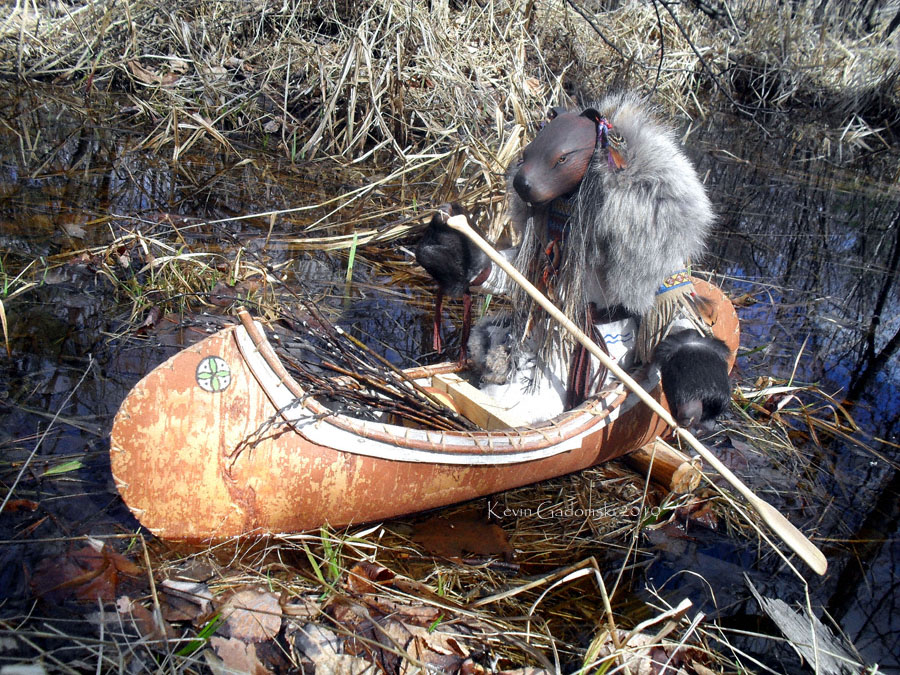
"Beside knowledge of the Great Laws and the gift of precognition, each individual creature is endowed with unique and singular powers proper to himself and his kind. Each has his sphere on earth, each his own time for the performance and fulfillment of his purpose and powers." Basil Johnston
Anishinaabe Clan System
In Ojibway society, it is ideal for each band to incorporate the five basic social units Leadership (chiefs), Defense (warriors), Sustenance (hunters), Learning (teachers), and Medicine (healers), in order to be well rounded and provide the basic needs of the clans to survive. These roles are represented by animals whose characteristics mirror the qualities of each.
In general, Leadership is represented by birds such as the Crane and the Eagle for their ability to see the bigger picture and for their powerful voices and eloquent speech. These qualities give them the ability to influence others. Defense is generally related to predator animals such as the Wolf and the Bear for their fierce and often antagonistic temperaments. Violent and quarrelsome youth are tolerated as a necessary evil for the protection of the tribe, and making war is a rite of passage and a test of courage for young men. Learning is commonly represented by fish such as the Pike, teaching by example, low-key, yet remaining steadfast in the hidden depths. Sustenance is represented by game animals such as the Moose and the Buffalo who provide food, clothing, and shelter. An individual or band renowned for their hunting abilities would choose one of these as their totem, demonstrating the relationship between the two. Medicine is commonly associated with the amphibious beings such as the Turtle or the Otter, as these animals are 'go-betweens' connecting the light and concreteness of the physical world with the dark and mysterious underworld from which they derive the esoteric knowledge needed for physical and spiritual healing.
OJIBWAY CLAN SYSTEM
|


| Resources | |
| The Mishomis Book:
The Voice of the OjibwayBenton,
Banai, Edward. Saint Paul, Minnesota: Indian Country Press, Inc. 1981 |
|

There is also a ton of information about Ojibway tradition, religion, myth, art, music, literature, history, lots of books for sale, etc. at Native Americans: Chippewa Indian Tribe (Ojibway First Nations, Ojibwa, Anishinabe)
Native Languages of the Americas: Chippewa
(Ojibway, Anishinaabe, Ojibwa)
Native American Resources Online
Lot's of Native Animal Lore and stories here: The Natural World-Animal Powers and Lore-Air Page 2
 Links
Links
Friends, artists, miscellany, hodgepodge, etc.
If you would like to link to my page, feel free to use this Banner created by Christy Grandjean.
Or if you like, this one's pretty cool, too!

Maryline Ayel

Antony and Harry Thomas
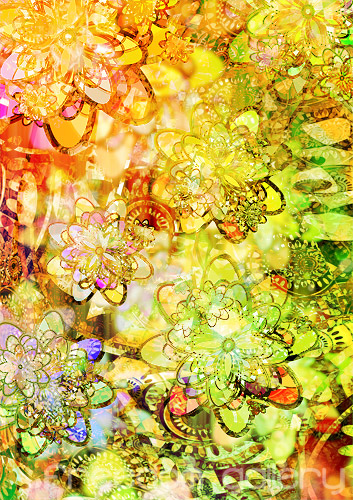
"A Love Last Summer" by Harry Thomas
Welcome to Freedom Gallery (UK)
Freedom Gallery is an online gallery and arts website, home to the portfolios of artists Antony Thomas, Harry Thomas and Claire Pixton.
http://www.freedomgallery.co.uk/
Kelly Vetter
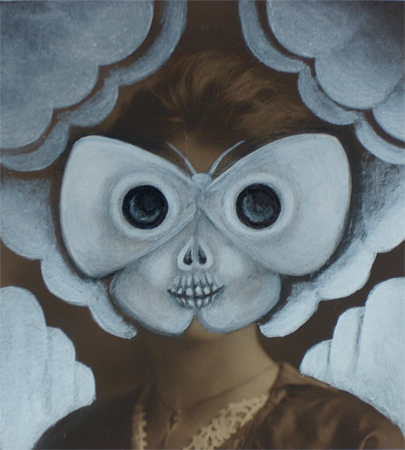
Lost Love
Born in Jersey City, named after dad’s favorite pub, and raised in between the malls and highways of the asphalt coated garden state… a post punk suburban life backlit by a skyline of refineries, creating hazy curtains that veiled a twinkling, dreamlike Manhattan skyline.
Influenced by this surreal scene and a formal education in the arts at Pratt Institute, Kelly Vetter creates an allegorical alternate universe of miniature paintings on panel, artworks employing recycled paper and ephemera evoking a fractured fairytale fantasyland. Equal parts O’Keeffe, Frida Kahlo and Dali, the contrast of painterly surfaces and personal narrative invites the viewer into the haunting dreamspace that only a Jersey Girl can conceive.

Liverpool area guitarist, composer and all around cool guy, Colin Guthrie
"Born in Liverpool, England, on the 16th April 1962, it would not be long before I was attempting to play music on something or other. I can remember there was always a guitar around the house and I would try and play the melodies being played around me on the radio or on record. Although I originally wanted to be a drummer, but the guitar was an obvious choice as I already had access to one. It wasn't long before I was being influenced by such guitarists as Ritchie Blackmore, Jan Akkerman, Rory Gallagher, Jimi Hendrix, and of course I was aware of a particular local guitarist George Harrison. As the years went on and I became more and more accomplished, I decided I needed to join, or form a band..."
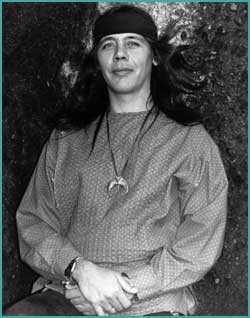
Artist Rod Bearcloud Berry
http://www.starnationgallery.com/
"The Anishinabe people (Eng.: Ojibway, Fr.: Chippewa) have an ancient prediction that they speak of as the Seven Fires Prophesy. This prophecy in inseparable from their medicine traditions. Although a significant portion of the prophecy specifically relates to their ancient history, their migrations, and the appearance of various prophets and teachings, the prophecy also speaks of the "time of the Seventh Fire," the time we are in now. It holds that a powerful spiritual process is under way in which many people, regardless of their ethnic background, are retracing their steps back into a holy connection to the earth and the Creator that their primal ancestors once knew. They too feel it a time of choice making, between self destruction and the birth of an Eighth Fire of planetary spiritual and ecological renewal."
Excerpt from
Cathy Wells
TTouch Certified P-1
Animal Communication
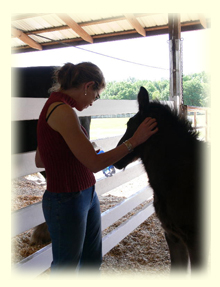
www.commonheart.net
"All species are connected and all Beings Matter"
Interested in a unique and comfortable wilderness vacation in the Boundary Waters Canoe Area? Check Out www.gunflint.com
