
|

[ Little
Manitous ]
[ Website Exclusives ]
[ Potluck ]
[Mystery Page ]
[ Pricelist ]


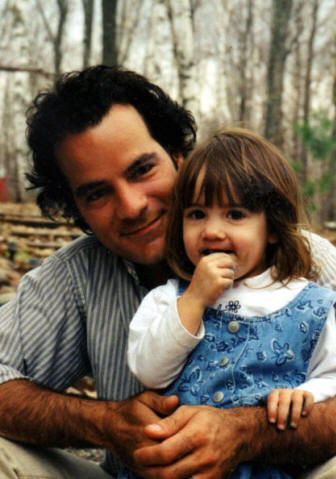
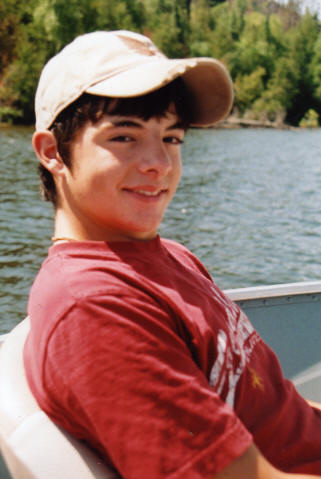
Me and Tanner
Contributing Artists:
Robert Krogh
Sandy Lange

Inspired by the Ojibway heritage of my
children, I began creating the Manitou pieces many years ago. My
interest in all things esoteric has led me to explore shamanism, totemism,
mysticism, Taoism, Zen, Sufism, Animism, nature, reality, dreaming, metaphysics,
Kevinism as a life
path which are all more or less reflected in my work. Basically, a learn as you
go, organic way of being which shuns dogma and indoctrination to any specific
belief system and embraces unfiltered experience that doesn't require
interpretation. Gathering, condensing, focusing, and co-creating.
I attended a small liberal arts college where I studied Art
under the guidance of Paul Hubinsky and Philosophy with an emphasis on Eastern
Religion under the tutelage of T.P. Kasulis who had previously designed and taught
courses at Harvard and Yale. (Now, I bet you're really impressed!) Taoism and Zen mostly. Originally from
a working-class neighborhood on the Arthur Kill, Sewaren, New Jersey, surrounded by oil refineries, industrial pollution, chemical
waste, garbage, and other lovely by-products of our exploding population, I've spent
more than the latter half of my life so far here in the 'north
country'. A lot less traffic!
Tanner's Native
American heritage is of the Turtle Clan of
the Grand Portage Band of Ojibway.
As for my genetic make
up, you may have assumed that I was Polish, in which case you would be wrong. I
am exactly half French (Saint Bonnet) and half Italian (D'Addario).
Become A Fan!
Frequently Asked Questions about Shamanism
What is Shamanism? And what can it do for modern peoples?
"Shamanism" as a term is accepted to refer to a wide variety of techniques and
practices,
grounded in cultures worldwide, that help human beings mediate spiritual and
mundane
issues, such as healing, problem solving, and the passage of the soul before,
during and after
birth, life and death, Some commonly known types of shamanic practices include
Navajo
medicine people, as well as Central American curandera, or "healers". "Shaman"
is a Siberian
term meaning "one who walks between worlds." This is not the only term used by
those who
practice these ways.
Shamanism can do for modern people much the same thing it has been doing for
people for
thousands of years--namely, help people to deal with mundanely unanswerable
issues.
Shamanism is a dynamic way to deal with spiritual and esoteric crises, those
that come as a
regular part of life’s changes and those that come about as part of a special
occurrence or
situation. Some of the areas traditionally associated with shamanic work ,
especially the
healing of many different kinds of physical and mental ailments and injuries,
have been
largely taken over by Medical doctors and those in the Psychological and
Counseling
professions, but even here shamanic practices can be used to speed progress and
healing in
conjunction with modern technologies, because the realms of the shaman are
eternal and
universal.
What kinds of Shamanism exist today?
In addition to the surviving Native American traditions, people are
rediscovering their
cultural roots in Ireland, Scotland, Great Britain, Wales, Iceland, Siberia, The
Hawaiian
Islands, Africa and Asia and many other places. Most indigenous cultures show
some
indication of shamanic practices, and so by tracing one’s own roots one can
usually find a
way to some kind of shamanic tradition. So universal are these ways, that
Michael Harner,
author of The Way of the Shaman and founder of an institute for shamanic studies
has
proposed that these practices can be separated from their cultural contexts into
a set of
practices that anyone can use to navigate the spiritual realms. This is known as
"Core
Shamanism", and while it might seem reasonable to assume that western peoples,
who have by
and large lost a deep connection with their ancestral heritages, would be very
attracted to a
non-cultural spiritual practice, many still seek out traditional ways and a
cultural context in
which to learn and practice the ways between the worlds, even when those ways
seem to
differ from the cultural heritage they were born into. Examples of this include
Native
American and Celtic paths.
What is a Shamanic journey like?
To induce a gentle trance state, facilitating the shift in consciousness
necessary to the work,
drums, bells or rattles are often used to pace a steady, driving beat. As if in
a lucid dream,
the shaman can move and walk about, can see and hear as well. While journeying
the shaman
goes to the subtle spiritual worlds which lie next to and intertwine with our
own, conscious
world, and from the character of the place he or she goes, and the nature of the
animals and
other beings he or she sees there, the meaning of the journey takes shape.
What are Power Animals?
Animals are seen by shamans as demonstrating certain lessons and capabilities.
As guardian
spirits, or helpers, each person is said to have at least one and frequently
many different
spirits who can help him or her spiritually, in harmony with the individual’s
innate character
and talents. These spirits can leave the individual if the individual ignores
them or fails to
honor them. A shaman can help individuals recognize or draw back their power
animals when
this happens.
What is Soul-Loss?
Soul loss is the term used to describe what happens spiritually when our
boundaries are nor
honored. It is as if a part of our essential self has left us and become stuck
in the source of
the conflict, or as if a part of us inside has gone to sleep. Shamans say that
soul loss is very
common in the modern world, with its quick-paced impersonality, and soul-loss is
something
that shamanic practitioners can usually help heal.
What is Power-Loss?
Shamanic power is really more a question of being properly hooked into a circuit
of flow.
The power, like water or electricity, comes from a universal spiritual source,
manifests in
myriad ways through the spiritual and physical realms, comes to us, and is used
by us, and so
flows out, and eventually back to source. The trouble happens when we shut
ourselves off
from the flow, or it "grounds out" in us, or becomes blocked and floods us out.
Because we
are in "circuit" with other human beings, this sometimes means that when people
get detached
from the right flow, they inappropriately turn to each other to seek the power
they really
need to come from the universal source. This is not good for either party, and
Shamans are
trained to recognize and help correct this kind of imbalance
What is Celtic Shamanism?
This reconstructed shamanic path works with symbolism and mythologies from
Ireland,
Scotland, Wales and Britain. It often involves study of the Ogham, the wisdom
of the Trees.
Celtic Shamanism is NOT Druidism. Celtic Shamans do many of the same things
shamans in
other cultures do, but they have their own terminologies for these things, for
instance, Celtic
shamans call their inworld journey work "imram". Celtic Shamans must study the
Healing Arts
and the Craft of War, so that every Celtic Shaman is both a warrior and a
healer. There is
also a great emphasis on Bardic knowledge.
Can anyone do Shamanism?
There are many Shamanic techniques that anyone can practice safely, for example,
grounding, or honoring one’s ancestors. However, practicing shamanism and being
a Shaman
are two separate things. The trained Shaman must be able to recognize things
that are
crucial to a balanced application of the intense energies that can be activated
almost
casually with easily learned techniques, and he or she must be able to work for
other people
in a way that will facilitate their healing and support their wellbeing. Shamans
must get good
results for their workings, and must use their powers wisely, or as worldwide
legend has it,
they will lose their powers. Beginners, especially those who learn the
techniques from books,
may not have this background, and can run into unexpected and potentially
dangerous
spiritual and energetic ground. When in doubt, seek out a well-trained and
experienced
individual for workings or teaching.
Pooklaroux @ 1999, 2000, 2001. 2002, 2003

Kevin Gadomski
75671 Twin Oaks Road Finlayson, MN 55735
Tel: 320-233-0541
Email:
keving@northlc.com
www.facebook.com/kevin.gadomski

|